

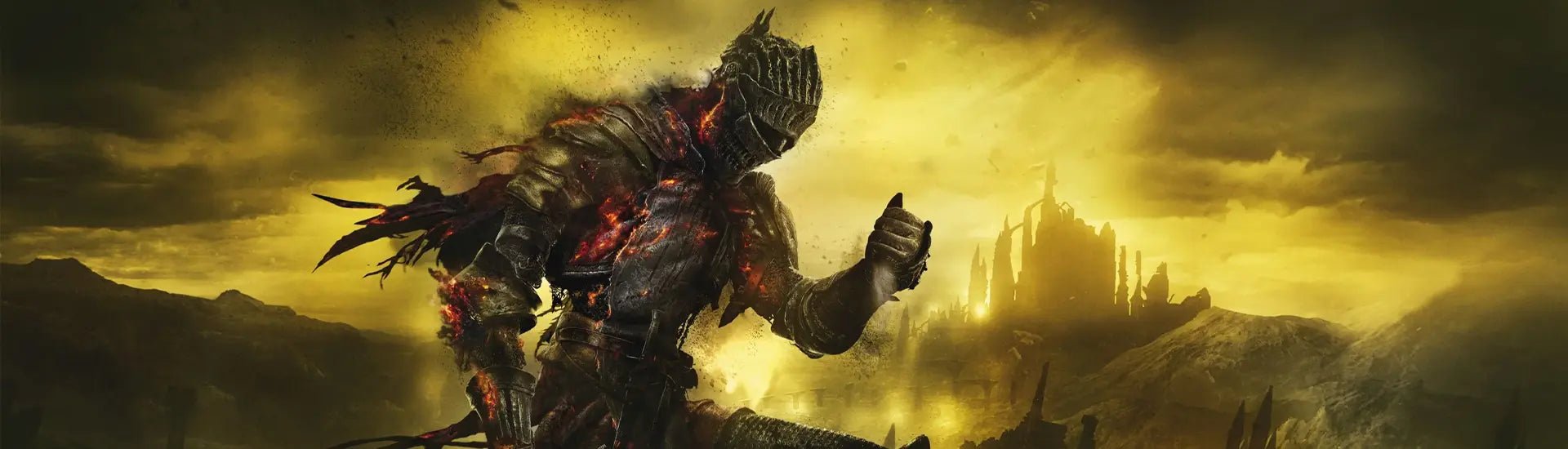
The Best Dark Souls Fashion in Gaming — Ranked (And How We Turned It Into Streetwear)
Each design ships once. Once they're gone, they're gone forever. That's the point.
Dark Souls doesn't just have great gameplay. It has one of the most visually devastating wardrobes in the history of interactive media.
We're talking about armor sets that tell entire tragic histories without a single line of dialogue. The tattered remains of a Silver Knight who fell to something he couldn't fight. A wolf standing watch over a grave its owner will never return to. A Hollow in rusted iron, wandering in circles, still vaguely remembering what it meant to have purpose.
From Software spent fifteen years building a world where what you wear is the lore — and players felt that deeply long before anyone called it "Fashion Souls." The community didn't just min-max stat builds. They built visual stories. They dressed for the role they wanted to play in a world that gave them almost nothing to hold onto.
At Cruel Royalty, that world is home. And the question we kept returning to was: what does it look like when that darkness moves off the screen and onto a heavyweight Comfort Colors tee?
Here are the 8 most iconic Dark Souls design moments in gaming — the characters, armor sets, and images that defined Fashion Souls, and the reason our Artorias Ruins Series exists.
The Chosen Undead at the Bonfire
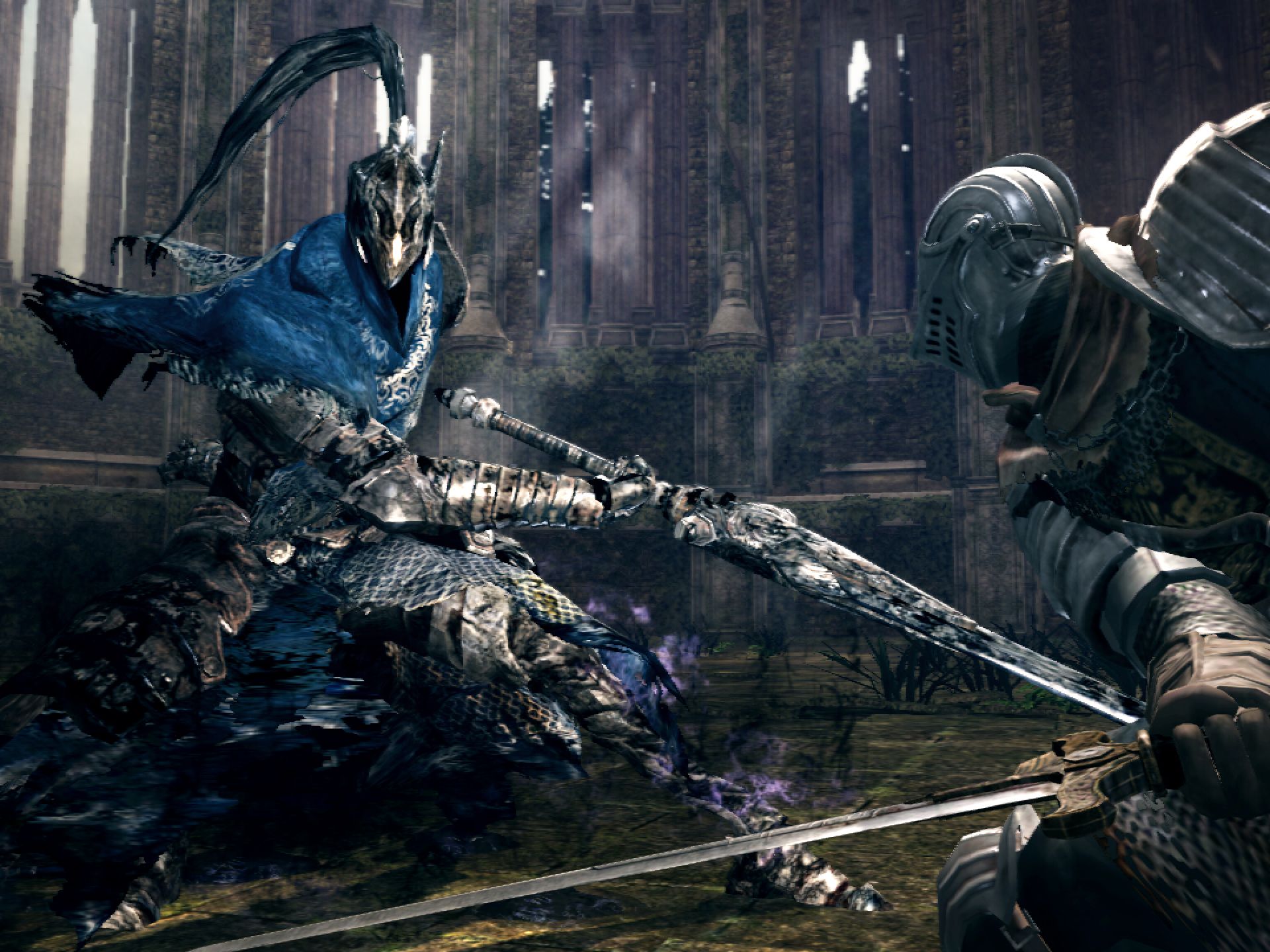
Dark Souls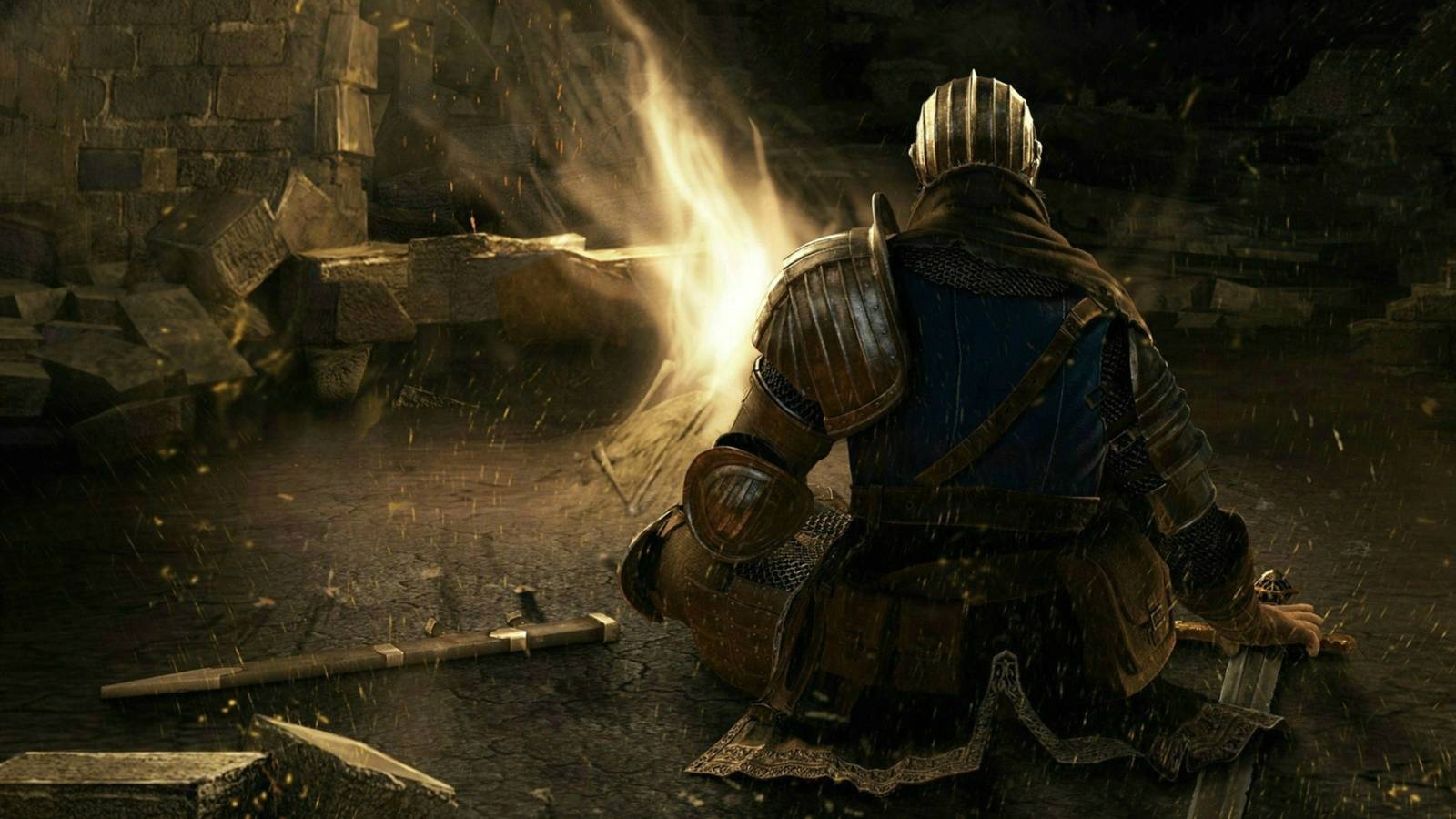
It's not armor. It's not a boss. It's a posture.
The image of your character sitting at a bonfire — exhausted, sword resting across the knees, firelight throwing long shadows across whatever battered set you're wearing — is one of the most recognizable images From Software ever created. It became the loading screen. It became fan art. It became something players understood emotionally before they could explain why.
What's being communicated in that image is profoundly simple: someone kept going when they had every reason to stop. The wear on the armor isn't cosmetic — it's biographical. Whatever you were wearing when you finally rested, you earned.
That's the foundation of Fashion Souls. It's not about looking clean. It's about looking like someone who survived something.
Pontiff Sulyvahn — The God Who Chose Darkness
Dark Souls III
Before the fight begins, you've already lost something.
The Pontiff Sulyvahn fog gate is one of the most visually commanding moments in the entire Soulsborne catalogue. The cathedral. The scale. The figure waiting in the dark at the far end with two swords already drawn — one of fire, one of dark — as if he's been expecting you for centuries and is only mildly interested in the outcome.
Sulyvahn's design is immaculate: ceremonial robes that suggest authority, a posture that suggests contempt, and those twin blades that suggest he chose his path deliberately. He's not corrupted. He's committed. There's a difference, and From Software understands it completely.
The terror of the Pontiff isn't his difficulty. It's the way his design communicates total conviction. He's beautiful, composed, and completely prepared to destroy you. That combination doesn't have a name, but every Souls player recognizes it the moment they step through the fog.
Siegmeyer of Catarina — The Onion Knight
Dark Souls
No armor set in Dark Souls history is more immediately recognizable than the Catarina Set.
It's round. It's ridiculous. It looks like someone welded a suit of armor out of onions and sent a man into the apocalypse wearing it. And Siegmeyer of Catarina — the jolly, perpetually stuck, relentlessly optimistic knight inside it — became one of the most beloved characters From Software has ever created precisely because of that contrast.
The Onion Knight works as a design because it's weaponized warmth in a world that offers almost none. Lordran is ash and silence and things that want you dead. Siegmeyer shows up blocked by a fog gate he can't get through, completely unbothered, taking a nap against the wall while he thinks things over. He finds every situation "quite the pickle." He laughs. He thanks you. He genuinely means it.
The tragedy of Siegmeyer's arc is that the armor never changes. The round silhouette, the ridiculous proportions — still there at the end. The man inside is gone. What From Software understood is that the most devastating thing you can do with a character design is make you love it first, and then show you what it costs.
The Catarina Set is the most human armor in the game. In a world built to make you feel small, it's the one set that makes you smile before it breaks your heart.

Malenia, Blade of Miquella — Rot in Full Bloom
Elden Ring
Malenia is what happens when From Software asks: what does a goddess of decay look like when she's also the most dangerous fighter alive?
The Malenia design is a controlled contradiction. The prosthetic limbs — both arms replaced by gold and silver mechanisms, intricate and precise — sit against the scarlet rot blooming from her body like something organic forcing its way through architecture. She's immaculate and deteriorating at the same time. The gold helm. The white hair. The single eye that still sees everything. She looks like a saint and fights like something far older than that word.
What elevates Malenia beyond pure spectacle is the lore embedded in the design. She has never known defeat — and yet she has been losing her entire life, her body consumed by a rot she was born with, that she can never fully control, that she passed to an entire kingdom the moment her power was drawn out. The prosthetics are not trophies. They're the cost. She replaced what the rot took and kept moving.
The Scarlet Bloom transformation — petals of rot erupting from her in mid-air — is the most visually stunning moment in Elden Ring, and possibly in the entire Soulsborne series. From Software took decay and made it look like something sacred. That tension is the whole character in a single image.
She has never been defeated. She has never stopped paying for what she is. Both things are true.

The Artorias Ruins Series
From the Undead Asylum to Ash Lake — heavyweight Comfort Colors tees built for the world of Dark Souls.


The Hunter — Bloodborne's Most Elegant Design
Bloodborne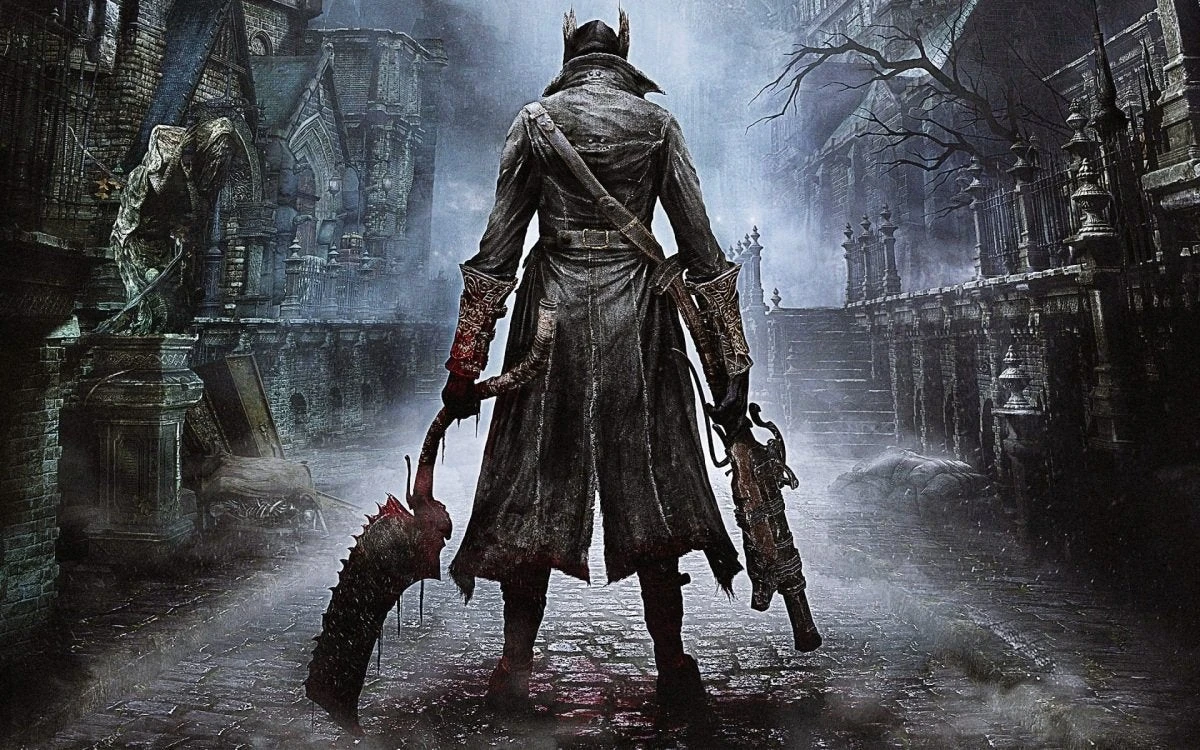
Bloodborne exists at the edge of the Soulsborne world, but its design language belongs in this conversation entirely.
The Hunter's Set is one of the most considered costume designs in any game ever made. The tricorn hat. The long coat in muted grey-brown. The gloves and boots that suggest someone who has been in contact with things that don't wash off. It's Victorian Gothic filtered through sheer practicality — clothing designed by someone who knew exactly what they'd be doing in it.
What makes the Hunter remarkable from a design standpoint is restraint. Bloodborne is a game about cosmic horror and grotesque transformation, and the Hunter remains almost entirely human-looking. The contrast is the point. You're a person, moving through something that stopped being human a long time ago, and your clothing keeps reminding you of that distinction — even as it gradually stops being true.
The Hunter's aesthetic influenced streetwear in ways the games industry still doesn't fully acknowledge. The long coat silhouette, the muted palette, the worn texture — these aren't video game costume choices. They're fashion choices that happen to be in a video game.

The Nameless King — The Most Visually Perfect Boss in Souls History
Dark Souls III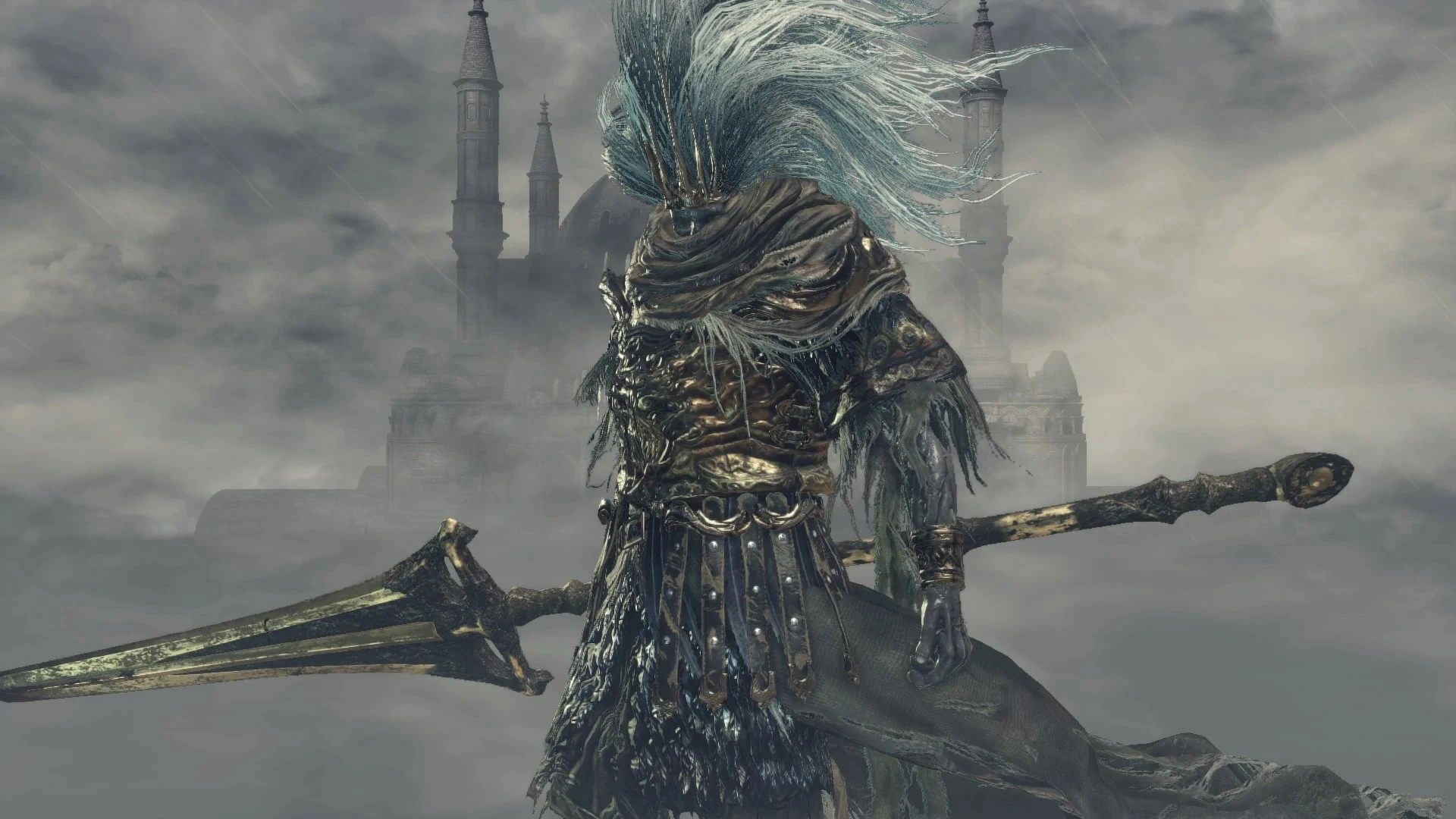
There's a moment before the Nameless King descends where the arena, the sky, the scale of everything stops you completely.
Archdragon Peak. Storm clouds lit from within. A figure riding a wyvern through fog and lightning, emerging slowly into full view. The Nameless King's design reads like myth compressed into a character model — the tattered gold robes, the ancient helm, the spear that crackles with something older than thunder. He looks like a god who chose to give everything up and has been living with that choice ever since.
The lore behind the Nameless King is deliberate in its ambiguity. A firstborn son of Gwyn. A dragon rider who defied his father by siding with the very creatures the gods sought to destroy. Exiled from history so completely that his name was literally erased. What's left is a figure defined entirely by what he sacrificed — and the design reflects that. Regal without being pristine. Powerful without being triumphant.
He is, by almost any measure, the most beautiful character design From Software has ever produced. The fight is remarkable. The visual is mythological.
The Tarnished — Elden Ring's Answer to Fashion Souls
Elden Ring
Elden Ring didn't invent Fashion Souls. It perfected it.
The sheer volume and variety of armor sets in Elden Ring — combined with a dye system, enhanced visual fidelity, and an open world that let you compose your character against stunning natural backdrops — transformed Fashion Souls from a Dark Souls sub-community into the primary way millions of players engaged with the game.
The Tarnished character design itself is built for this. The base model is intentionally neutral — a blank canvas for whatever identity you construct through your armor, your weapon, your posture in the world. That openness is philosophical, not just cosmetic. The Tarnished has no fixed history, no predetermined appearance. They are whoever survived long enough to keep going.
The designs that emerged from the Elden Ring community — the careful, considered builds mixing Carian knight pieces with Raya Lucaria robes, the jarhead builds, the Fingerprint Knight full sets for pure scale — represent something genuinely creative happening at the intersection of game design and personal expression.
Elden Ring proved that FromSoftware's visual language had grown large enough to sustain an entire aesthetic ecosystem. The Tarnished is that ecosystem's central citizen.

Artorias of the Abyss — The Most Iconic Design in Souls History
Dark Souls Artorias Ruins Series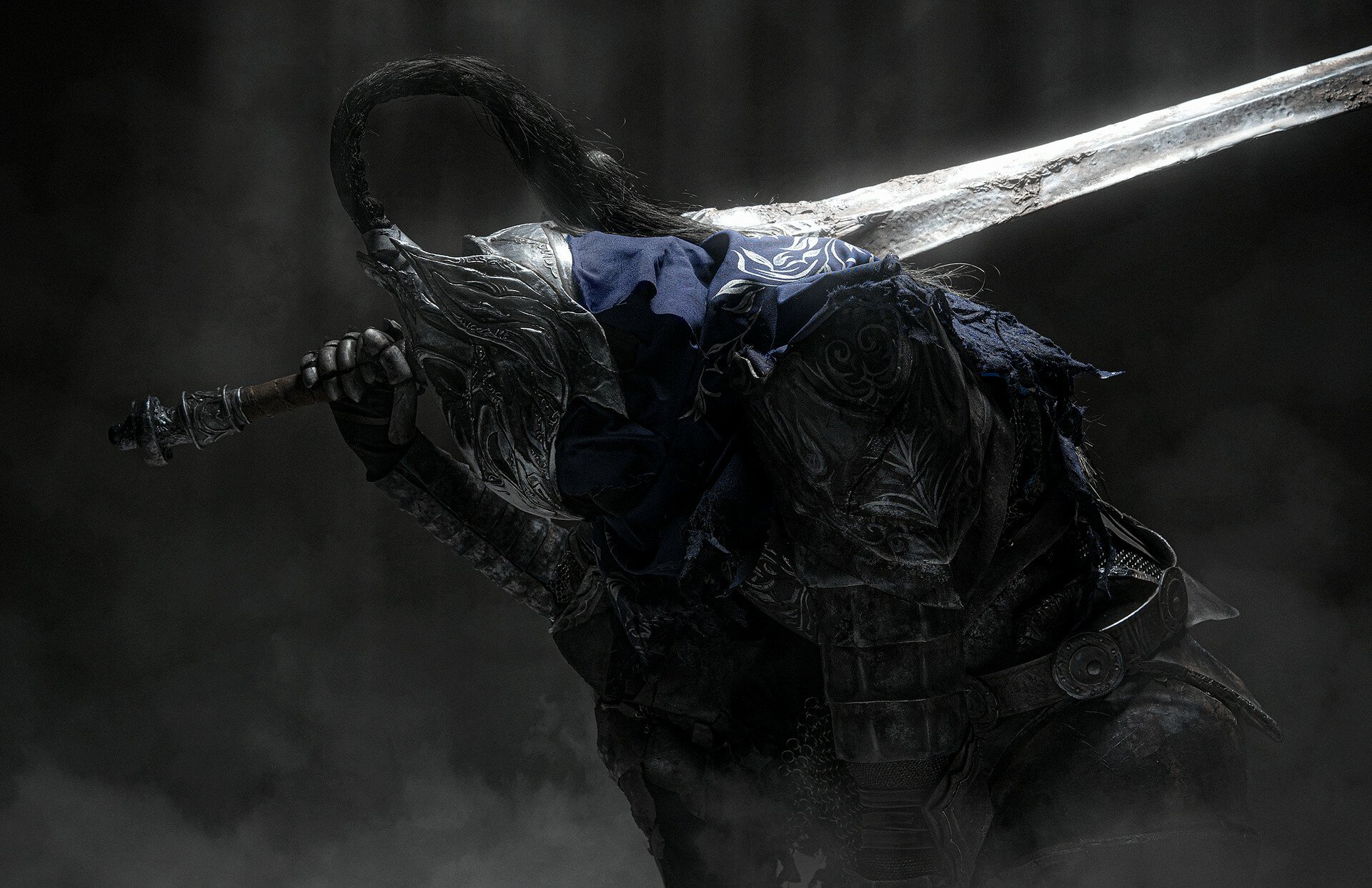
There is no debate.
Knight Artorias is the single most iconic character design From Software has ever produced. The silhouette alone ends arguments: a once-glorious Silver Knight reduced to a hunched, twitching shell, tattered cape shredded at the edges, left arm broken and hanging useless at his side — sacrificed when he used his own body to shield his wolf companion from the Abyss.
That last detail is everything. Artorias didn't lose his arm in battle. He gave it. He wrapped himself around Sif and absorbed what the Abyss was going to take from his companion, and he's been carrying that damage ever since. When you fight him, you're fighting a man who has been corrupted by the thing he tried to protect against, still swinging with one working arm, still moving with the ghost of the greatness he used to be.
The design communicates all of this without a word of dialogue. The cracked helm. The broken posture. The sword swung with a fury that belongs to someone who remembers being better than this and is fighting that memory as hard as they're fighting you.
This is what great character design does: it tells a complete story through form. Artorias is tragedy made visible. He's what happens when the most capable person in the room faces something they cannot win and refuses to stop anyway. That image — the corrupted legend, still fighting — carries more emotional weight than most full-length films manage in two hours.
It's the reason the Artorias Ruins Series exists. It deserves to exist somewhere other than a screen.

Honorable Mentions
These didn't make the top 8, but they belong in the conversation:
- Solaire of Astora — The most hopeful man in the most hopeless world. The Sunlight Warrior armor is bright and worn in equal measure — gold fading at the edges, the sunburst insignia still proud on the chest. His ending is the franchise's most quietly devastating moment.
- Sif the Great Grey Wolf — No image in the Souls series hits harder than the moment Sif goes to three legs. A grey wolf. A massive sword too big to hold upright. The simplicity is what makes it impossible to forget.
- Gwyn, Lord of Cinder — The original fire-keeper. The cost of holding back the dark alone, for so long, that you forget what you were.
- Leonhard of the Swords — The most elegant traitor in the series. Rose-masked, impossibly composed, completely committed to his own agenda.
- Sister Friede — A design built on contradiction: a serene, nun-like figure who becomes one of the most aggressive bosses in Dark Souls III. The visual dissonance is the point.
- Gwyndolin — The god who built an illusion to fill the space left by a dying kingdom. Tragic, ethereal, and under-appreciated.
Dark Souls doesn't just have great fashion. It has the best argument in gaming for why aesthetics matter. Every armor set, every character design, every fog gate entrance is making a claim about what it means to persist in a world built against you — and doing it visually, without explanation.
That's the world Cruel Royalty was built inside. Our work isn't inspired by Dark Souls. It comes from it. The heavyweight Comfort Colors blanks, the Frazetta-influenced illustration approach, the no-restock drop model — all of it is designed to carry the weight these games carry. Because they deserve that.
If you've read this far, you already know what we're talking about.
Wear the Dark. No Restocks. No Exceptions.
Cruel Royalty drops weekly. Every piece is limited. Every design is built to hold the weight of the world it comes from.
Shop cruelroyalty.com


